Why Chinese Cars Finally Matter. And How This Year’s Festival of Speed Proved It.
If you’d told someone ten years ago that the Goodwood Festival of Speed would be the launch pad for cutting-edge EVs from China, the response would probably have been somewhere between scepticism and laughter. It’s all the proof you need that Chinese cars matter.
James Kelly
|
Chinese cars are not arriving. They’re already here – and the real story isn’t where they’re built, but how they got so good, so quickly.
If you’d told someone ten years ago that the Goodwood Festival of Speed would be the launch pad for cutting-edge EVs from China, the response would probably have been somewhere between scepticism and laughter.
Most people worked on the assumption they’d be cheap and probably wouldn’t be too cheerful. They’d cut corners. They’d naturally struggle to compete with Europe’s established brands. And even if they managed to build something competent and desirable, it would be years before prospective buyers would trust them. Not an unreasonable conclusion.
The history of automotive is littered with manufacturers that underestimated just how difficult it is to persuade people to spend hard earned cash on badges they’ve never heard of; building cars is one thing, but building trust and authority is another entirely.
Yet here we are.
I’ve been to more Chinese car launches over the last few years than for any other brand. BYD. Omoda. Jaecoo. Leapmotor. Xpeng. Some people still dismiss them, but increasingly these are the people that haven’t driven one, or insist on driving a 2013 Volkswagen Golf diesel until it expires.
History repeats.
There’s always been disrupters. Some were more successful than others. The current climate is often compared to the likes of Japanese manufacturers successfully taking on European markets in the ‘70s and ‘80s.
More recently, Hyundai Group spent billions on engineering, design and marketing, and today can be considered some of the most forward-thinking and successful OEMs out there. Lessons are obvious in hindsight, but China’s story is different.
What’s the difference? Timescales.
What’s fascinating isn’t that Chinese manufacturers have caught up. It’s the timeframe they have achieved it in. Most new automotive brands will spend decades climbing the ladder. First they learn to build decent, reliable cars. Then they’ll slowly improve their quality. They might bring in a European design team.
Many of the Chinese manufacturers that are now a daily sight on Britain’s roads skipped several of those steps. Mainly because they entered the global market during on the biggest technological resets the automotive industry has gone through.
The biggest difference has been the industrialisation of a country that does not play by the West’s playbook.
The move towards electric vehicles truly changed everything pretty much over night. What we now refer to as “legacy” OEMs, spent years refining their platforms, carefully and thoughtfully. But swap out a four-cylinder combustion engine and gearbox for an electric motor with some lithium-ion batteries, and the playing field was levelled overnight. And we’ve watched it play out in real time – government mandated emission regulations, which are now being rolled back, have not helped European OEMs one bit. But that’s just a tiny part of the puzzle.
The biggest difference has been the industrialisation of a country that does not play by the West’s playbook. For the last decade or so, battery tech, software integration and supply chains became just as important as any engine development, and China has spent years investing in these exact areas.
What happens when a country has control over 40% of the critical raw materials like lithium-ion? It uses them. Combined with the unique, state-backed mastery that has encouraged hyper-competition in its domestic market, it has given China true domination.
By the time European OEMs fully committed to electrification, many Chinese companies already possessed one of the biggest advantages in the industry: experience.
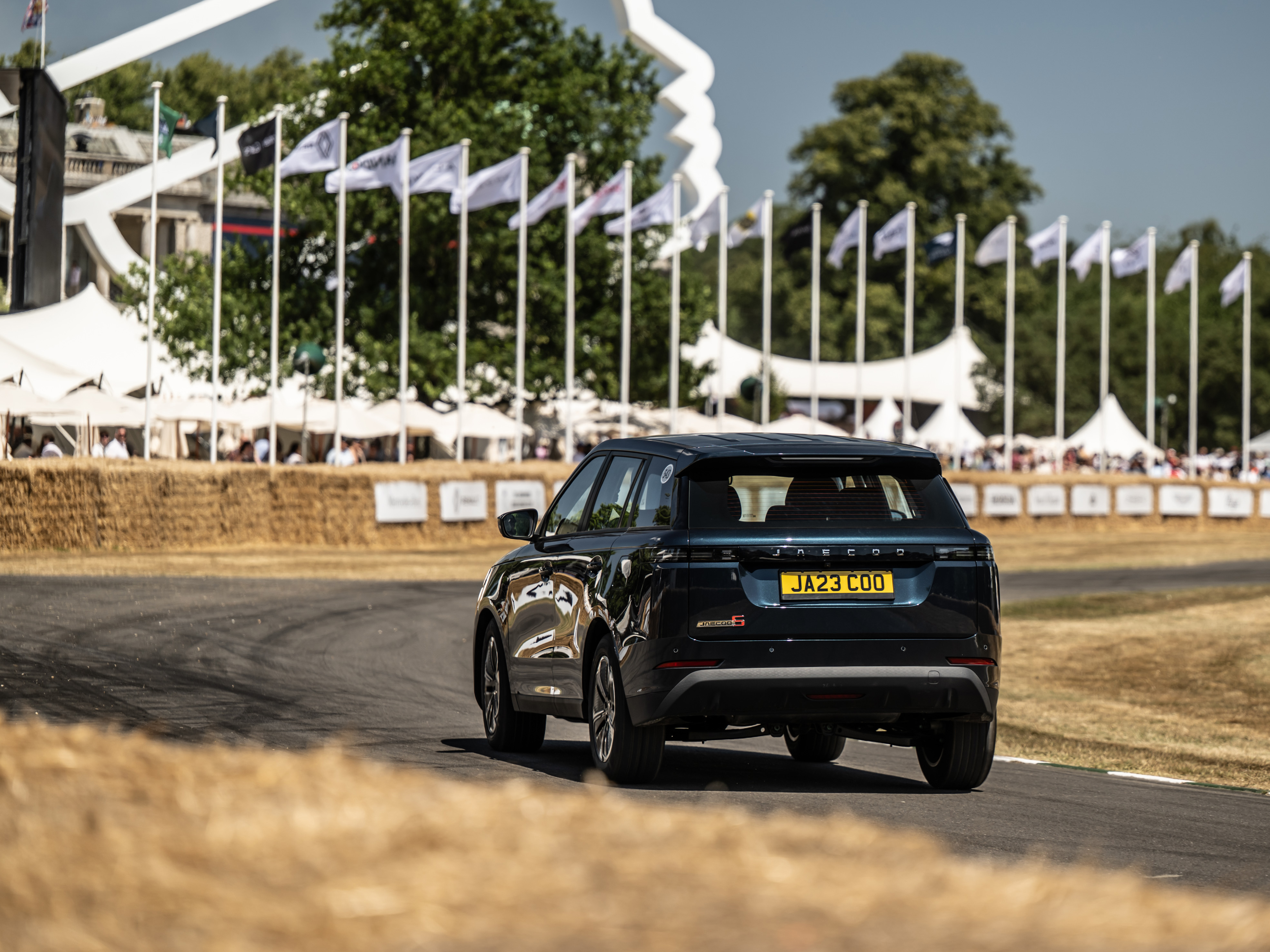
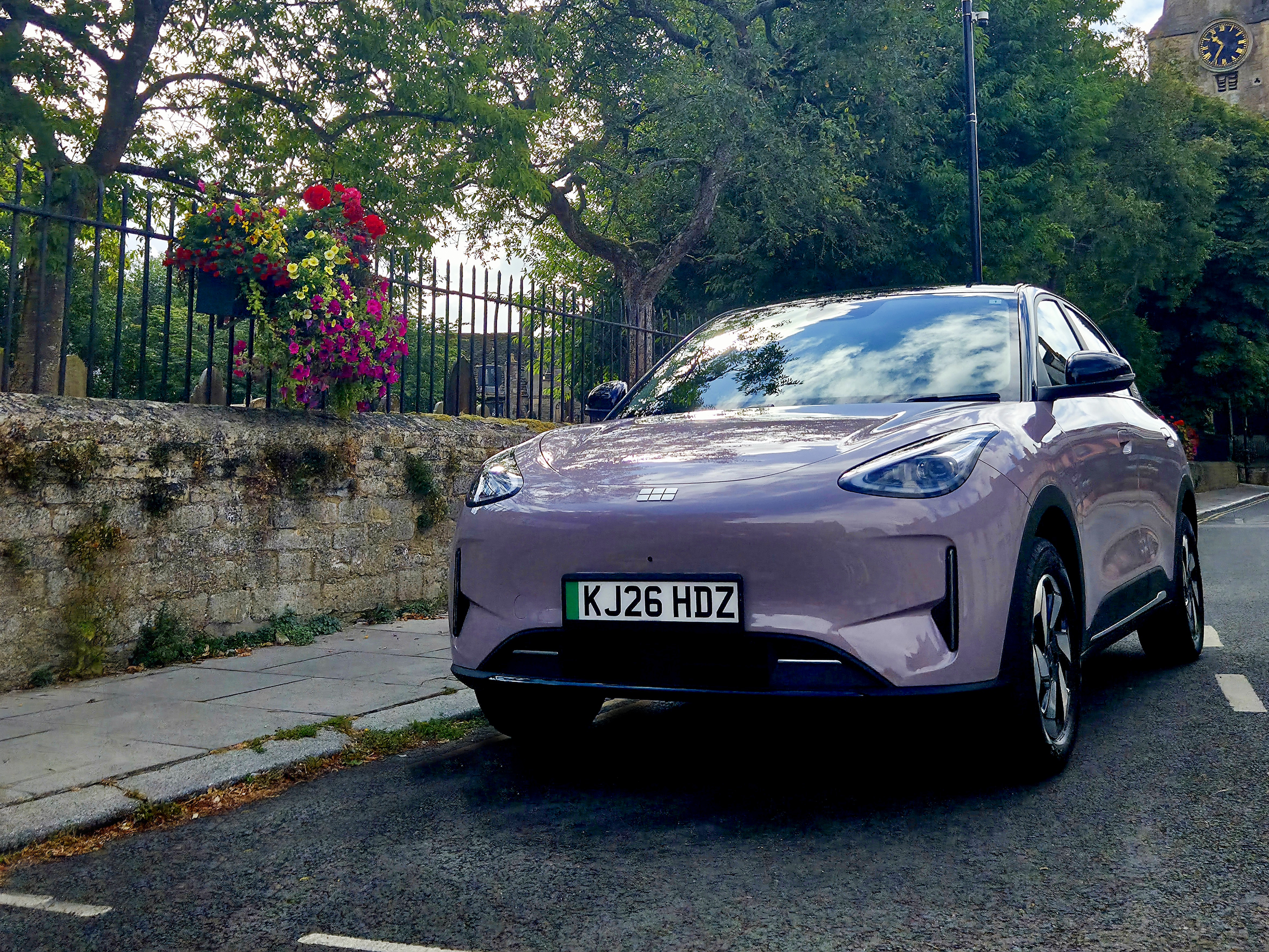
BAO 5 on the Goodwood trackBYD stand at Goodwood Festival of Speed 2026Jaecoo 5 on track at Goodwood Festival of SpeedLepas L8 – another new Chinese brand
These aren’t car companies.
Perhaps the biggest mistake we make in Europe is assuming Chinese manufacturers think like European manufacturers. Many aren’t really car companies in the traditional sense. They’re technology businesses that happen to build cars.
Walk around the headquarters of BYD or Xpeng and you’ll find software engineers sitting alongside automotive engineers. Product updates aren’t measured in years between facelifts, but in weeks between over-the-air updates. User interfaces evolve. Driver assistance systems improve. Features arrive after you’ve taken delivery.
Perhaps the biggest mistake we make in Europe is assuming Chinese manufacturers think like European manufacturers.
The car no longer leaves the factory as a finished product. Instead, it’s a platform that continues to develop throughout its life. That mindset isn’t unique to China, but it has been embraced there more quickly than almost anywhere else.
Competition breeds excellence.
One thing that’s easy to overlook from the comfort of Europe is just how brutally competitive the Chinese domestic market has become.
European manufacturers have spent decades competing with a handful of familiar rivals. China’s manufacturers compete with dozens.
If a new model misses the mark, another manufacturer is ready with an alternative within months.
Prices move quickly. Technology moves even faster. The result is relentless pressure to improve. It’s uncomfortable for manufacturers, but it’s fantastic for consumers.
That environment has created companies capable of designing, engineering and launching new products at a pace many established brands simply aren’t structured to match.
Culture is a biggie too.
Perhaps the biggest reason China has accelerated so quickly has nothing to do with batteries or subsidies. It’s culture.
For decades, much of Europe’s automotive identity has been rooted in heritage. Manufacturers proudly reference racing success from the 1960s, engineering icons from the 1980s and design classics from the 1990s. Their history is one of their greatest strengths.
But history can also become baggage. If you’ve spent a century perfecting the combustion engine, asking your engineers to abandon it isn’t simply a technical challenge.
It’s an emotional one. China didn’t have that burden. Electric vehicles weren’t seen as replacing something sacred.
They were simply the next chapter. Consumers embraced them with remarkable speed because they represented progress rather than compromise.
Owning an EV wasn’t making a statement. It was buying the latest technology. That’s a subtle but hugely important distinction.
Looking west.
It’s easy to frame this as a race that Europe has already lost. I don’t think that’s true. European manufacturers still lead in many areas: driving dynamics. brand heritage.
Premium craftsmanship. Emotional appeal. Those qualities still matter enormously, but they aren’t enough on their own. The industry has fundamentally changed, and it’s been driven by China.
Software now matters as much as suspension tuning. Battery chemistry matters as much as engine architecture. Supply chains matter as much as styling.
Success increasingly belongs to manufacturers capable of mastering all three.
What it means for customers.
For anyone looking to lease or buy a new car over the next few years, this is only good news. More competition almost always leads to better products.
Ten years ago, many mainstream manufacturers were still treating electric cars as compliance exercises. Today they’re building them because they have to compete.Not just with Tesla. With BYD. With Xpeng. With Leapmotor.
These are all companies that, until recently, most British motorists had never even heard of. And we’re back to stating the obvious: Competition has a funny way of accelerating progress.
The bigger picture.
I don’t think the story of Chinese cars is really about China at all. It’s about what happens when an industry experiences its biggest technological reset in over a century.
Every great disruption creates new winners. The internal combustion engine created Ford. Post-war reconstruction elevated Volkswagen. Japan rewrote the rules on quality.
Korea challenged perceptions of value. And now, EVs have given China its opportunity.
Whether every Chinese brand survives is almost beside the point. Many won’t.
History tells us consolidation is inevitable. But the influence they’ve already had on the global automotive industry is impossible to ignore.
The real lesson isn’t that Chinese manufacturers suddenly learned how to build good cars. It’s that they recognised where the industry was heading, committed to it earlier than almost anyone else, and built an ecosystem capable of supporting that ambition.